
The question
What is computable clinical meaning?
Computable clinical meaning is the accurate, context-aware representation of what a clinical encounter established, in a form machines can act on without obscuring what matters clinically.
A clinical encounter establishes more than a diagnosis or a list of coded concepts. It may establish what a patient reported, what an examination revealed, what was observed, what was ruled out, and what the clinician concluded.
When this information enters a health record and becomes available for computational use, its meaning depends on more than whether the right clinical concept was recorded.It depends on whether the distinctions that give the information its clinical significance remain represented.
The distinction in one line
Semantic interoperability concerns whether different systems interpret exchanged information consistently.
Computable clinical meaning examines whether what the clinical encounter established is accurately represented in the first place, and whether that meaning remains intact as information is documented, structured, transformed, exchanged, and used computationally.
What the term covers
A clinical concept is not a clinical statement
A clinical concept identifies what a finding, disorder, or procedure is about.
A clinical statement establishes what is being said about it, including the context in which it is asserted.
The distinction matters because identifying a clinical concept does not, by itself, establish the full meaning of a clinical statement.
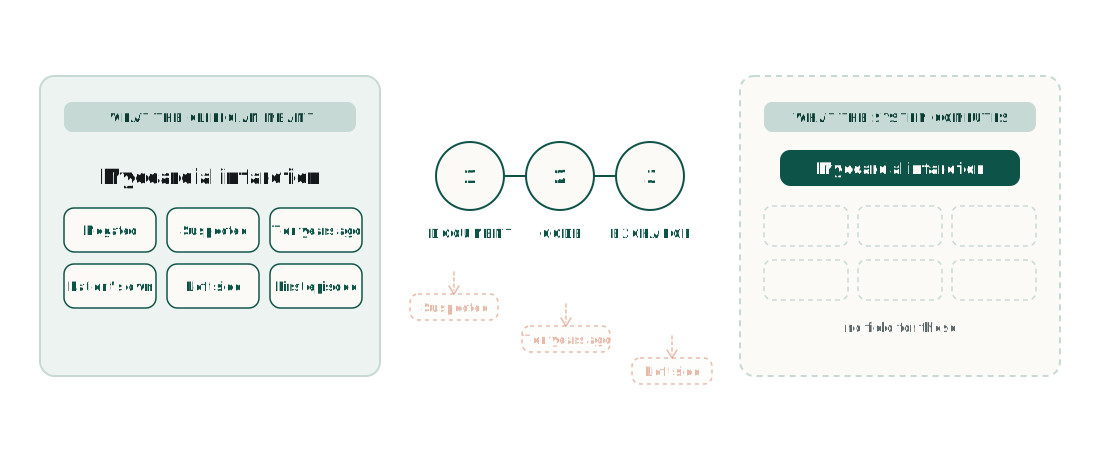
Consider three statements concerning myocardial infarction:
- PolarityNegated
- CertaintyAsserted
- TemporalityPresent
- SubjectThe patient
- LateralityUnstated
- EpisodicityUnstated
- PolarityPositive
- CertaintySuspected
- TemporalityCurrent
- SubjectImplied, not named
- LateralityUnstated
- EpisodicityUnstated
- PolarityPositive
- CertaintyConfirmed, historical
- TemporalityTen years ago
- SubjectThe patient
- LateralityUnstated
- EpisodicityFirst or recurrence, not stated
All three statements refer to the same clinical concept. Yet each establishes a different clinical situation.
The first explicitly negates the finding. The second expresses diagnostic uncertainty. The third refers to a confirmed event in the patient’s history.
The concept alone does not convey these distinctions. They are part of the meaning of each clinical statement and must be represented if that meaning is to remain available for computational use.
The six modifiers
What gives a clinical statement its meaning?
A clinical statement carries more than a clinical concept. Its meaning also depends on details such as whether a finding is present or absent, how certain it is, when it occurred, and whose history is being described.Balsam Semantica examines six dimensions to understand how these details are represented and preserved as clinical information moves through different systems.
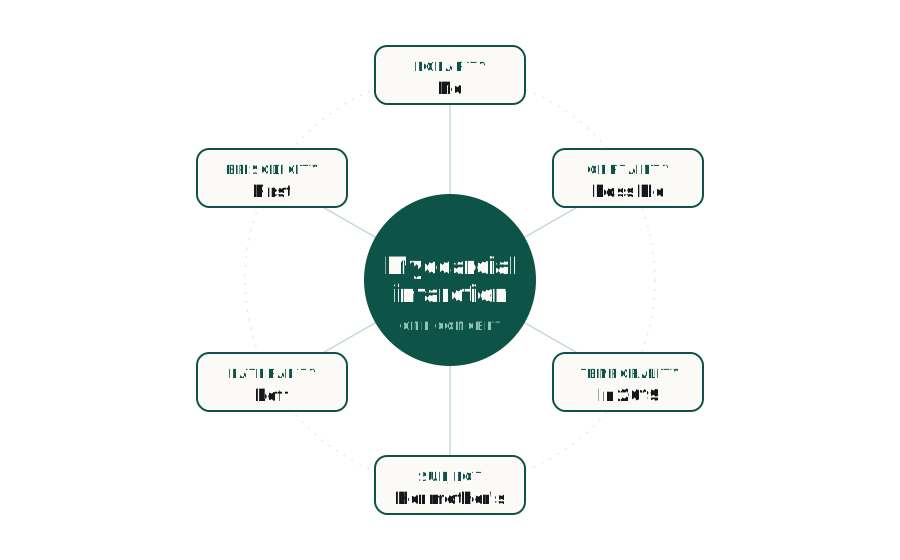
No
Polarity
Whether the clinincal finding is present or absent.
Possible
Certainty
Whether a clinical finding or diagnosis is confirmed, suspected, or remains uncertain.
In 2019
Temporality
When a clinical finding or event occurred, and whether it refers to the present, the past, or the future.
Her mother's
Subject of record
Whom the clinical statement is about: the patient or another person, such as a family member.
Left
Laterality
Which side of the body is affected, when the distinction is clinically relevant.
First episode
Episodicity
Whether a clinical event represents a first occurrence, a recurrence, or an episode whose sequence is not specified.
These six dimensions provide an analytical lens, not a universal set of attributes for every clinical concept. Not all dimensions apply to every statement. Their relevance depends on the clinical context and the information being represented.
Neighbouring concepts
Related fields, a distinct question
Semantic interoperability
Semantic interoperability concerns whether different systems can exchange information and interpret it consistently using shared meanings and representations.
Achieving it requires more than successful data transfer. It depends on compatible information models, terminology, implementation, and governance.
Computable clinical meaning examines whether the clinical intent and context established in the original encounter are accurately represented and remain available as information moves between systems.
Information may be exchanged successfully while a clinically important distinction is still missing from the resulting representation..
Computable phenotype
A computable phenotype is an operational definition of a clinical condition or characteristic, expressed through data elements and logical rules that can be applied to electronic health records and related data sources.
Its performance depends on the quality of the phenotype definition and the suitability of the underlying data for the intended use.
For example, a phenotype designed to identify suspected sepsis may depend on whether the source data distinguish suspected cases from confirmed diagnoses.
Computable clinical meaning examines the clinical distinctions on which such definitions depend, and whether those distinctions are accurately represented in the data being processed.
Clinical data quality
Clinical data quality examines whether data are fit for their intended use. Common dimensions include completeness, accuracy, consistency, validity, and timeliness.
These dimensions are essential, but they do not always establish whether a clinical statement retains every distinction necessary for its interpretation.
For example, a record may contain all required fields while failing to distinguish a finding that was explicitly ruled out from one that was never assessed.
Computable clinical meaning focuses on whether the clinical context needed to interpret a statement is accurately represented and preserved.
Clinical documentation integrity
Clinical documentation integrity examines whether the health record accurately, completely, and consistently represents the patient’s condition and the care provided.
It supports appropriate diagnosis and procedure coding, clinical communication, quality reporting, patient safety, and other uses of health information, including reimbursement.
Computable clinical meaning examines what happens to the clinical intent and context expressed in that documentation when information is structured, extracted, transformed, or used by other systems.A record may meet documentation and coding requirements within its original setting, yet still lose distinctions that matter to downstream computational use..
Data provenance
Data provenance describes the origins and history of information, including the entities, activities, and agents involved in producing or modifying it.
In clinical documentation, provenance can help establish whether information was entered by a clinician, generated by an AI system, imported from another source, or subsequently modified.
This is particularly important when multiple people and systems contribute to the same record. Without adequate provenance, it may be difficult to reconstruct how a statement entered the record or how it changed over time.
Provenance helps establish where information came from and how it was produced. It does not, by itself, establish whether the information is clinically correct.Computable clinical meaning considers provenance alongside the clinical content and context needed to interpret a statement accurately.
Under AI
What AI can produce depends on what the data preserve
AI systems work with the information made available to them.An ambient documentation system may have access to the clinical encounter itself. A downstream model working from the resulting health record may have access only to the information captured and preserved in that record.
In either case, what the system can establish depends on the information available to it and how that information is represented.
A system may generate a coherent summary, extract a diagnosis, or classify a patient while important clinical distinctions remain missing, misrepresented, or disconnected from their context.
The fluency of an AI-generated output does not establish the accuracy or completeness of the clinical information on which it is based.
If a relevant distinction was never captured or was lost during a subsequent transformation, a downstream system cannot reliably reconstruct it from information that no longer contains it.
This makes the representation of clinical meaning a governance concern, not merely a documentation or terminology concern.
Institutions need to understand what was recorded, how it was transformed, what information was made available to an AI system, and what the system could legitimately establish from it.
AI can generate clinical text. It cannot independently establish the clinical facts or intent that the record is meant to represent.
Those must be accurately captured, reviewed, governed, and represented in a form that systems can interpret and use without losing the context that makes them meaningful..
Origin
Where the term came from
Computable clinical meaning emerged from a question at the intersection of clinical practice, health data standards, and the growing use of computational systems in healthcare.
What happens to the meaning established during a clinical encounter when it is documented, coded, structured, and later used by systems for purposes beyond the original care setting?
The term provides a way to examine this question across the health data lifecycle, from the initial representation of clinical information to its subsequent computational use.
Computable clinical meaning is a conceptual framework developed by Balsam Semantica. It is not presented as an established international standard or a formally validated measurement model.
Clinical meaning must remain connected to what the clinical encounter established, including the distinctions and context necessary for accurate interpretation.
Balsam Semantica examines how clinical meaning is represented, transformed, and preserved across clinical documentation, terminology, structured health data, and computational use.
The central question is simple:
When a system acts on clinical information, does that information still represent what the clinical encounter established?
The institutional conditions for governing clinical meaning in AI-enabled environments are examined through the CIRI™ Assessment..